
Ben Greenfield Life
hosted by Ben Greenfield
We tested 7 claims from Ben Greenfield Life against the research. 0 held up, 0 did not, and the rest are partly true or still too early to judge.
What a speaker claims elsewhere is on their own profile.
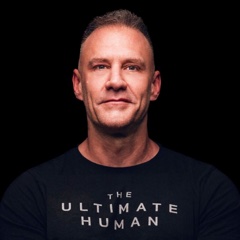
Gary Brecka
Human biologist and longevity expert, former mortality predictor in the life insurance industry · Who he is, what he sells, where he stands →
PartlyGary Brecka (Human biologist and longevity expert, former mortality predictor in the life insurance industry) · Ben Greenfield Life, October 2026 · watch the episode ↗︎ · stated with confidence
“Supplementation with urolithin A reduces systemic inflammation and recharges mitochondria in immune cells.”
Gary Brecka (Human biologist and longevity expert, former mortality predictor in the life insurance industry) · Ben Greenfield Life, October 2026 · watch the episode ↗︎ · stated with confidenceUrolithin A has a biologically plausible mechanism through the clearance of damaged mitochondria, and small human studies show cautiously positive signals for mitochondrial health and muscular endurance. However, the claim goes beyond the available evidence: effects on systemic inflammation in humans have not been demonstrated in the studies, and the research comes largely from the manufacturer itself, without independent confirmation. The specific idea of 'recharging mitochondria in immune cells' has not yet been tested in humans.
PartlyGary Brecka (Human biologist and longevity expert, former mortality predictor in the life insurance industry) · Ben Greenfield Life, October 2026 · watch the episode ↗︎ · stated with confidence
“Urolithin A stimulates mitophagy, the process by which damaged mitochondria are cleared and recycled.”
Gary Brecka (Human biologist and longevity expert, former mortality predictor in the life insurance industry) · Ben Greenfield Life, October 2026 · watch the episode ↗︎ · stated with confidenceUrolithin A does indeed have a plausible mechanism of action through the clearance of damaged mitochondria, which is what mitophagy is. That mechanism is also the starting point in research into this supplement. However, 'stimulates mitophagy' presents this as an established fact, whereas the evidence in humans is still limited and the studies have largely been funded by the manufacturer without independent confirmation. The claim points in the right direction, but goes beyond what the current evidence firmly supports.
PartlyGary Brecka (Human biologist and longevity expert, former mortality predictor in the life insurance industry) · Ben Greenfield Life, October 2026 · watch the episode ↗︎ · stated with confidence
“Around the age of twenty, the thymus begins to shrink (involution), leading to reduced T-cell production and immune ageing.”
Gary Brecka (Human biologist and longevity expert, former mortality predictor in the life insurance industry) · Ben Greenfield Life, October 2026 · watch the episode ↗︎ · stated with confidenceThe fact that the thymus shrinks and consequently produces fewer new T-cells, causing the immune system to decline with age, is well documented and broadly confirmed by human studies. However, 'around the age of twenty' as a starting point is stated more precisely than the research supports: the findings describe a gradual process without specifying an exact age of onset. The direction of the claim is correct, but that precise threshold of twenty years cannot be substantiated.
Dr. Sandra Kaufmann
Anesthesiologist and specialist in cellular aging and longevity
PartlyDr. Sandra Kaufmann (Anesthesiologist and specialist in cellular aging and longevity) · Ben Greenfield Life, September 2026 · watch the episode ↗︎ · stated with confidence
“Magnesium L-threonate crosses the blood-brain barrier and increases synaptic plasticity in the hippocampus.”
Dr. Sandra Kaufmann (Anesthesiologist and specialist in cellular aging and longevity) · Ben Greenfield Life, September 2026 · watch the episode ↗︎ · stated with confidenceResearch shows that magnesium L-threonate (MgT) reaches the brain more effectively than common forms of magnesium, and that small human studies show cautiously positive effects on memory and cognition. The claim regarding crossing the blood-brain barrier is therefore supported. However, the specific mechanism mentioned in the claim, namely increasing synaptic plasticity in the hippocampus, comes from animal research and has not yet been convincingly demonstrated in humans. The evidence for such a categorical claim remains too limited.
PartlyDr. Sandra Kaufmann (Anesthesiologist and specialist in cellular aging and longevity) · Ben Greenfield Life, September 2026 · watch the episode ↗︎ · stated with confidence
“Higher levels of lithium in drinking water and food are correlated with lower all-cause mortality.”
Dr. Sandra Kaufmann (Anesthesiologist and specialist in cellular aging and longevity) · Ben Greenfield Life, September 2026 · watch the episode ↗︎ · stated with confidencePopulation research offers tentative indications that low doses of lithium, such as those found in drinking water, are associated with less cognitive decline and possibly beneficial health effects. However, the claim that higher lithium levels correlate with lower all-cause mortality goes beyond what the available research can confirm with certainty: the results are mixed and the studies are preliminary in nature. There is no strong evidence that this association holds for the broad category of all causes of death.
Dr. Ben Goertzel
Scientist and founder/CEO of SingularityNET, specializing in artificial general intelligence (AGI)
PartlyDr. Ben Goertzel (Scientist and founder/CEO of SingularityNET, specializing in artificial general intelligence (AGI)) · Ben Greenfield Life, September 2026 · watch the episode ↗︎ · shared as personal experience
“Gene therapy aimed at telomere lengthening can actually lengthen telomeres in the human body.”
Dr. Ben Goertzel (Scientist and founder/CEO of SingularityNET, specializing in artificial general intelligence (AGI)) · Ben Greenfield Life, September 2026 · watch the episode ↗︎ · shared as personal experienceThat gene therapy aimed at telomere lengthening works in principle has been demonstrated in cell and animal studies: telomerase can compensate for telomere shortening and thus keep telomeres longer. In humans, however, clinical evidence is largely lacking, and there is a serious safety risk: the same mechanism that allows cells to survive longer can also fuel cancer cells. The claim is therefore correct in terms of what is biologically possible, but it overlooks the fact that 'actually lengthening telomeres in the human body' has not yet been properly proven outside the laboratory.
From the episodes, no speaker named
PartlyBen Greenfield Life, August 2026 · watch the episode ↗︎ · stated with confidence
“Greater muscle mass and muscle density in the chest and upper back reduces the risk of a heart attack and death, even in the presence of vascular plaque.”
Ben Greenfield Life, August 2026 · watch the episode ↗︎ · stated with confidenceCT studies do indeed show that greater muscle mass and higher muscle density around the chest and upper back are associated with fewer heart attacks and lower mortality, even in people with vascular plaque. However, this is observational research: it has not been proven that the muscles are the cause. Muscle mass is also an indicator of fitness and overall health in a broader sense.