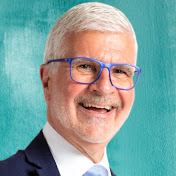
The Dr. Gundry Podcast
hosted by Steven Gundry
We tested 13 claims from The Dr. Gundry Podcast against the research. 1 held up, 2 did not, and the rest are partly true or still too early to judge.
We only test the claims that can be checked, not everything that is said. This is not a ranking.
Dr. Ezekiel Emanuel
Oncologist, bioethicist and professor at the University of Pennsylvania
✓ Holds upDr. Ezekiel Emanuel (Oncologist, bioethicist and professor at the University of Pennsylvania) · The Dr. Gundry Podcast, September 2026 · watch the episode ↗︎ · repeated in September 2026 · stated with confidence
“During sleep, the brain consolidates memories and clears out defective proteins and waste products.”
Dr. Ezekiel Emanuel (Oncologist, bioethicist and professor at the University of Pennsylvania) · The Dr. Gundry Podcast, September 2026 · watch the episode ↗︎ · repeated in September 2026 · stated with confidenceResearch confirms both parts of this claim. Sleep demonstrably strengthens memory: the brain processes and consolidates new information during sleep, and even a single night of too little sleep impairs that process. In addition, it is well documented that the glymphatic system, the brain's drainage network, is active during sleep and largely dormant during the day; deep sleep drives this waste-clearing process. Both functions together are broadly supported by multiple studies.
PartlyDr. Ezekiel Emanuel (Oncologist, bioethicist and professor at the University of Pennsylvania) · The Dr. Gundry Podcast, September 2026 · watch the episode ↗︎ · stated with confidence
“Biologically speaking, humans need seven to nine hours of sleep, and both chronically sleeping fewer than seven hours and sleeping more than ten hours is unhealthy.”
Dr. Ezekiel Emanuel (Oncologist, bioethicist and professor at the University of Pennsylvania) · The Dr. Gundry Podcast, September 2026 · watch the episode ↗︎ · stated with confidenceLarge and consistent research shows that seven to eight hours per night is the healthiest range for adults, and that structurally sleeping fewer than seven hours is associated with more illness and a higher risk of mortality. The claim that sleeping fewer than seven hours is unhealthy therefore aligns well with the evidence. However, the upper threshold of ten hours cannot be firmly established: the research points to increased risks with very long sleep durations, but does not identify ten hours as a specific tipping point. The claim that seven to nine hours represents a universal biological need also goes somewhat beyond the evidence, as individual sleep requirements can vary.
Dr. Steven Gundry
Former cardiac surgeon, author and lifestyle physician
PartlyDr. Steven Gundry (Former cardiac surgeon, author and lifestyle physician) · The Dr. Gundry Podcast, August 2026 · watch the episode ↗︎ · stated with confidence
“Omega-3 fatty acids from seafood combat neuroinflammation and prevent bacterial LPS from crossing the intestinal wall.”
Dr. Steven Gundry (Former cardiac surgeon, author and lifestyle physician) · The Dr. Gundry Podcast, August 2026 · watch the episode ↗︎ · stated with confidenceThat omega-3 reduces inflammation, including in the brain, is reasonably well supported. The claim that it keeps bacterial particles from crossing the intestinal wall goes beyond what the research shows: there is some indication of this from animal studies, but not from human studies.
PartlyDr. Steven Gundry (Former cardiac surgeon, author and lifestyle physician) · The Dr. Gundry Podcast, August 2026 · watch the episode ↗︎ · stated with confidence
“Oats contain a protein that cross-reacts with gluten.”
Dr. Steven Gundry (Former cardiac surgeon, author and lifestyle physician) · The Dr. Gundry Podcast, August 2026 · watch the episode ↗︎ · stated with confidenceOats do indeed contain a protein that resembles gluten, and in a small group of people with coeliac disease this triggers a reaction. For most people, oats are well tolerated. The bigger practical problem is cross-contamination during processing, not the protein itself.
Mark Sisson
Former endurance athlete, author of 'The Primal Blueprint' and co-founder of Peluva Shoes
PartlyMark Sisson (Former endurance athlete, author of 'The Primal Blueprint' and co-founder of Peluva Shoes) · The Dr. Gundry Podcast, September 2026 · watch the episode ↗︎ · stated with confidence
“Running for long periods at too high an intensity raises cortisol levels, which can promote chronic inflammation and weight gain.”
Mark Sisson (Former endurance athlete, author of 'The Primal Blueprint' and co-founder of Peluva Shoes) · The Dr. Gundry Podcast, September 2026 · watch the episode ↗︎ · stated with confidenceThe claim that chronically elevated cortisol promotes weight gain (particularly belly fat) and inflammation is well supported. However, the argument has one weak point: the leap from prolonged intensive running to a chronically elevated cortisol level is not substantiated by the available research. Cortisol rises acutely during intense exercise, but whether recreational or moderately overloaded running leads to the kind of structurally elevated cortisol from which the mentioned effects arise has not been demonstrated. The effects of chronically high cortisol are therefore correct, but the cause has been attributed to running in terms that are too categorical.
From the episodes, no speaker named
✗ Does not hold upThe Dr. Gundry Podcast, October 2026 · watch the episode ↗︎ · stated with confidence
“An adequate vitamin D blood level is between 100 and 150 ng/mL.”
The Dr. Gundry Podcast, October 2026 · watch the episode ↗︎ · stated with confidenceThe optimal vitamin D blood level supported by research is considerably lower than what this claim suggests. The most widely used target for bone health is 50 nmol/l, with 30 nmol/l as the absolute lower limit. The stated range of 100 to 150 ng/mL is far removed from those recommendations and is not supported by research into bone health, immune function, cancer or cardiovascular disease. Doses higher than those medically advised can in fact reduce bone density.
PartlyThe Dr. Gundry Podcast, October 2026 · watch the episode ↗︎ · stated with confidence
“Supplementation with vitamin K2 reduces calcification of the coronary arteries.”
The Dr. Gundry Podcast, October 2026 · watch the episode ↗︎ · stated with confidenceThe mechanism behind vitamin K2 and vascular calcification is biologically plausible, and there are indications that K2 plays a role in protecting blood vessels, but solid evidence from completed studies with hard endpoints is still lacking. The fact that several human trials are now underway shows that the question is being taken seriously, but none of those trials has produced published results. The claim that K2 supplementation reduces calcification of the coronary arteries therefore goes beyond the available evidence.
✗ Does not hold upThe Dr. Gundry Podcast, October 2026 · watch the episode ↗︎ · stated with confidence
“Osteopenia and osteoporosis are caused by a leaky gut.”
The Dr. Gundry Podcast, October 2026 · watch the episode ↗︎ · stated with confidenceA leaky gut is associated with various conditions, but whether it also causes those conditions has not been demonstrated in humans. The available evidence is largely associative: researchers do not yet know whether increased intestinal permeability is the cause or rather the consequence. A specific causal relationship with osteopenia or osteoporosis is not firmly established in the research. The claim presents something as an established cause, while the evidence does not point in that direction.
PartlyThe Dr. Gundry Podcast, October 2026 · watch the episode ↗︎ · stated with caution
“A high dose of vitamin D can potentially lead to an excessive calcium level in the blood and cause kidney stones.”
The Dr. Gundry Podcast, October 2026 · watch the episode ↗︎ · stated with cautionToo much vitamin D is indeed harmful: toxicity occurs at very high blood levels, and the safe upper limit for long-term use is 2,000 IU per day without medical supervision. The fact that an elevated calcium level can be a consequence of vitamin D toxicity fits within that picture. However, kidney stones are not explicitly mentioned as a consequence in the available research, so that step cannot be substantiated on the basis of current evidence.
PartlyThe Dr. Gundry Podcast, October 2026 · watch the episode ↗︎ · stated with confidence
“Vitamin K2, in combination with vitamin D, ensures that calcium from food is transported to the bones.”
The Dr. Gundry Podcast, October 2026 · watch the episode ↗︎ · stated with confidenceVitamin K2 does indeed play a role in bone health, and the combination with vitamin D appears to be more effective than either supplement alone; however, the description of "transporting calcium from food to the bones" is an oversimplification that goes beyond what the research shows. The evidence concerns the slowing of bone loss and the preservation of bone density, not a demonstrated transport mechanism for calcium specifically from food. Moreover, the effect is most strongly supported in postmenopausal women with bone loss, not as a general mechanism applicable to everyone.
PartlyThe Dr. Gundry Podcast, October 2026 · watch the episode ↗︎ · stated with confidence
“Very old, vital people generally have low mTOR and IGF-1 levels, while people with cancer show elevated levels.”
The Dr. Gundry Podcast, October 2026 · watch the episode ↗︎ · stated with confidenceThe link between low mTOR activity and healthy ageing is biologically well-founded: mTOR is a growth switch that, when chronically overactive, contributes to ageing, and in mice its inhibition demonstrably extends lifespan. However, this does not yet prove that very vital people consistently have lower mTOR or IGF-1 levels in humans. The connection with cancer is broadly correct, as elevated cell growth plays a role in cancer mechanisms, but the claim presents this more concretely and with more certainty than the evidence justifies.
PartlyThe Dr. Gundry Podcast, September 2026 · watch the episode ↗︎ · stated with confidence
“Eating too much red meat stimulates ageing processes and causes the production of TMAO.”
The Dr. Gundry Podcast, September 2026 · watch the episode ↗︎ · stated with confidenceThat eating a lot of red meat can be harmful to your health is supported by robust research: large studies consistently show an increased risk of colorectal cancer and cardiovascular disease. However, the claim that red meat 'stimulates ageing processes' goes beyond what the available evidence demonstrates; the research focuses on disease risks, not on ageing as such. The claim about TMAO production does not appear in the evidence examined and therefore cannot be substantiated on the basis of what is currently known.
PartlyThe Dr. Gundry Podcast, September 2026 · watch the episode ↗︎ · stated with confidence
“Olive oil stimulates autophagy and nourishes the gut microbiome thanks to a high polyphenol content.”
The Dr. Gundry Podcast, September 2026 · watch the episode ↗︎ · stated with confidenceOlive oil, and extra-virgin olive oil in particular, contains polyphenols, and the evidence that it is good for cardiovascular health is fairly solid. However, the leap to autophagy is too large: it has not been demonstrated that olive oil specifically stimulates autophagy in humans, and the best-supported ways to maintain autophagy are fasting, exercise and adequate sleep. As for the effect on the gut microbiome, high-fat diets can actually disrupt that microbiome, while the evidence for an isolated effect of olive oil's polyphenols on gut bacteria remains preliminary and weak. The claim combines two assertions that each suggest more certainty than the research justifies.