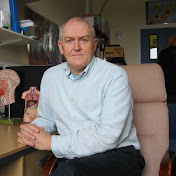
Dr. John Campbell
hosted by John Campbell
We tested 7 claims from Dr. John Campbell against the research. 2 held up, 0 did not, and the rest are partly true or still too early to judge.
Dr. Cohen
Physician
PartlyDr. Cohen (Physician) · Dr. John Campbell, September 2026 · watch the episode ↗︎ · stated with caution
“Taking around 3 grams of glycine before bedtime can promote sleep.”
Dr. Cohen (Physician) · Dr. John Campbell, September 2026 · watch the episode ↗︎ · stated with cautionThere are positive indications that glycine in an amount of around 3 grams taken before bedtime can slightly improve sleep quality, and a plausible biological mechanism is known. However, the available evidence in humans is thin: the studies are small, and a significant portion of them comes from the manufacturer itself rather than from independent researchers. The claim that glycine can promote sleep is therefore correct in direction and dosage, but conveys more certainty than the research currently justifies.
PartlyDr. Cohen (Physician) · Dr. John Campbell, September 2026 · watch the episode ↗︎ · stated with caution
“Getting sufficient sleep around the time of a vaccination improves the antibody response.”
Dr. Cohen (Physician) · Dr. John Campbell, September 2026 · watch the episode ↗︎ · stated with cautionResearch shows that sleep deprivation reduces the response to vaccinations, which supports the core of the claim. The relationship has been demonstrated in multiple human studies and is considered likely causal. However, the claim states that sufficient sleep actively improves the antibody response, whereas the evidence mainly shows that too little sleep weakens it. Whether extra or optimal sleep around the time of vaccination also raises the response above its normal level cannot be established on the basis of the available research.
PartlyDr. Cohen (Physician) · Dr. John Campbell, September 2026 · watch the episode ↗︎ · stated with confidence
“Restricting sleep to 4.5 hours for four nights leads to an increase in calorie intake of around 350 kcal per day and raises hunger hormones.”
Dr. Cohen (Physician) · Dr. John Campbell, September 2026 · watch the episode ↗︎ · stated with confidenceResearch shows that sleep deprivation disrupts hormone balance after just a few nights and is associated with increased appetite and weight gain. The finding that sleep restriction raises hunger hormones fits within this broader picture. However, the specific combination of exactly 4.5 hours over four nights and an increase of around 350 kcal per day cannot be traced back to the available evidence, so that precise figure cannot be substantiated. The direction of the claim is correct, but the specific numbers cannot be confirmed.
✓ Holds upDr. Cohen (Physician) · Dr. John Campbell, September 2026 · watch the episode ↗︎ · stated with confidence
“Deep sleep and REM sleep are essential for memory consolidation.”
Dr. Cohen (Physician) · Dr. John Campbell, September 2026 · watch the episode ↗︎ · stated with confidenceResearch shows that deep sleep and REM sleep each play their own role in memory consolidation: deep sleep anchors factual memory, while REM sleep integrates memories and subtly reshapes them. The two phases complement each other and are not interchangeable. The evidence for this comes largely from human studies, although causal proof remains incomplete in many areas. The claim that both phases are essential for memory consolidation aligns well with what current research shows.
PartlyDr. Cohen (Physician) · Dr. John Campbell, September 2026 · watch the episode ↗︎ · stated with caution
“Both chronically sleeping too little and chronically sleeping too much are associated with increased mortality.”
Dr. Cohen (Physician) · Dr. John Campbell, September 2026 · watch the episode ↗︎ · stated with cautionLarge population studies consistently show that chronically sleeping too little is associated with a higher risk of death and serious conditions such as heart disease and stroke. The claim is therefore correct regarding short sleep, but the evidence for long sleep as an independent risk factor for higher mortality is only touched on briefly in the available research. Furthermore, the evidence is based on observations rather than experiments, meaning a causal relationship has not been established. The direction of the claim is plausible, but the symmetry between too little and too much sleep is less well supported than the claim suggests.
✓ Holds upDr. Cohen (Physician) · Dr. John Campbell, September 2026 · watch the episode ↗︎ · stated with confidence
“The absence of a nocturnal blood pressure dip during sleep increases the risk of cardiovascular disease.”
Dr. Cohen (Physician) · Dr. John Campbell, September 2026 · watch the episode ↗︎ · stated with confidenceMost large studies show that a nocturnal blood pressure dip is absent in some people, and that this is associated with a considerably higher risk of heart attack, stroke, or heart failure. That association is stronger than the one seen with a high daytime reading at the doctor's office. The research is observational, so cause and effect are not fully established, but the direction of the claim is well supported by the available evidence.
Dr. David Grimes
Retired consultant physician and medical researcher
PartlyDr. David Grimes (Retired consultant physician and medical researcher) · Dr. John Campbell, September 2026 · watch the episode ↗︎ · stated with confidence
“Natural death from old age is caused by mitochondrial exhaustion and a decline in cellular energy production.”
Dr. David Grimes (Retired consultant physician and medical researcher) · Dr. John Campbell, September 2026 · watch the episode ↗︎ · stated with confidenceMitochondrial dysfunction and mutations are indeed closely linked to biological ageing, and that relationship is well established. However, the claim states that this is the cause of a 'natural death from old age', whereas research shows that ageing is driven by multiple interacting mechanisms, such as the accumulation of senescent cells and chronic inflammation. Mitochondrial exhaustion is a relevant factor, but the claim that it is the central cause of death from old age goes beyond what the available evidence supports.