
Dr. Josh Axe
hosted by Josh Axe
We tested 28 claims from Dr. Josh Axe against the research. 6 held up, 7 did not, and the rest are partly true or still too early to judge.
What a speaker claims elsewhere is on their own profile.
We only test the claims that can be checked, not everything that is said. This is not a ranking.
Dr. Will Cole
Author and functional medicine specialist
PartlyDr. Will Cole (Author and functional medicine specialist) · Dr. Josh Axe, September 2026 · watch the episode ↗︎ · stated with confidence
“Substances such as urolithin A, PQQ, NAD+ and coenzyme Q10 support the health and functioning of mitochondria.”
Dr. Will Cole (Author and functional medicine specialist) · Dr. Josh Axe, September 2026 · watch the episode ↗︎ · stated with confidenceFor each of these substances there is research suggesting a link with mitochondrial health, but the strength of the evidence varies considerably between substances and is far from convincing in humans in many cases. Urolithin A has a plausible mechanism of action through the clearance of damaged mitochondria, but the human studies are small, partly failed to reach their primary endpoints and largely come from the manufacturer. NAD+ supplements measurably raise NAD+ levels, but whether this actually leads to better mitochondrial health in humans has not yet been demonstrated. CoQ10 has the strongest human evidence, but specifically in people with heart failure, not as a general mitochondrial supplement. For PQQ, the available data are insufficient to reach a verdict. The claim that all these substances 'support' mitochondrial health therefore goes beyond what the current evidence justifies.
PartlyDr. Will Cole (American chiropractor, author and practitioner of functional medicine) · Dr. Josh Axe, September 2026 · watch the episode ↗︎ · repeated in September 2026 · stated with confidence
“During sleep, autophagy processes are activated to clear cellular waste.”
Dr. Will Cole (American chiropractor, author and practitioner of functional medicine) · Dr. Josh Axe, September 2026 · watch the episode ↗︎ · repeated in September 2026 · stated with confidenceResearch confirms that the brain cleans itself during sleep via the glymphatic system, and sleep is mentioned as one of the ways to keep autophagy active. The claim that autophagy processes are specifically activated during sleep to clear cellular waste is therefore broadly correct. However, the direct link between sleep and the activation of autophagy in cells is not well supported by the available evidence, and existing knowledge about sleep and the brain relates primarily to the glymphatic system, not to autophagy as such.
PartlyDr. Will Cole (American chiropractor, author and practitioner of functional medicine) · Dr. Josh Axe, September 2026 · watch the episode ↗︎ · stated with confidence
“Sleeping fewer than six hours per night causes an acute and significant rise in insulin levels.”
Dr. Will Cole (American chiropractor, author and practitioner of functional medicine) · Dr. Josh Axe, September 2026 · watch the episode ↗︎ · stated with confidenceResearch shows that chronically sleeping too little disrupts blood sugar regulation and increases the risk of type 2 diabetes in the long term. This effect occurs after just a few nights of insufficient sleep and works through several biological mechanisms. However, the claim that fewer than six hours of sleep causes an acute and significant rise in insulin levels goes beyond what the evidence firmly establishes: the studies demonstrate disrupted blood sugar regulation and an increased diabetes risk, but an acute, substantial insulin spike as a direct consequence is not confirmed that specifically.
✗ Does not hold upDr. Will Cole (American chiropractor, author and practitioner of functional medicine) · Dr. Josh Axe, September 2026 · watch the episode ↗︎ · stated with confidence
“By normalizing insulin and cortisol alone, virtually all other hormones in the body will restore themselves automatically.”
Dr. Will Cole (American chiropractor, author and practitioner of functional medicine) · Dr. Josh Axe, September 2026 · watch the episode ↗︎ · stated with confidenceResearch does confirm that insulin and cortisol influence each other and other systems, but there is no evidence that normalizing these two hormones alone is sufficient to restore virtually all other hormones automatically. Chronically elevated cortisol affects multiple systems, including immune function, sleep and body composition, and recovery depends on more factors than cortisol and insulin levels alone. The claim suggests a direct and near-complete chain reaction that the available research does not support. The reality is more complex: hormonal balance is an interplay of many systems, each with its own regulatory mechanisms.
Lysa TerKeurst
Author and founder of Proverbs 31 Ministries
✗ Does not hold upLysa TerKeurst (Author and founder of Proverbs 31 Ministries) · Dr. Josh Axe, September 2026 · watch the episode ↗︎ · stated with confidence
“The most important organ systems involved in the development of cancer are the immune system and the detoxification system.”
Lysa TerKeurst (Author and founder of Proverbs 31 Ministries) · Dr. Josh Axe, September 2026 · watch the episode ↗︎ · stated with confidenceResearch points to multiple biological processes that together contribute to the development of cancer: the accumulation of DNA damage, a weakened immune system, and chronic inflammation are all well established. The immune system certainly plays a role, but research does not identify it as one of two key players. The "detoxification system" as a distinct key organ system in cancer development is not named or substantiated as such in the available evidence. The claim suggests a neat two-part division that research does not support.
✗ Does not hold upLysa TerKeurst (Author and founder of Proverbs 31 Ministries) · Dr. Josh Axe, September 2026 · watch the episode ↗︎ · stated with confidence
“Holding on to unprocessed emotions from the past damages the colon and the immune system.”
Lysa TerKeurst (Author and founder of Proverbs 31 Ministries) · Dr. Josh Axe, September 2026 · watch the episode ↗︎ · stated with confidenceThe claim asserts a causal link between unprocessed emotions and damage to the colon and the immune system. Research does show that the gut and the immune system are closely connected, and that disruptions to the gut barrier or gut microbiome can dysregulate the immune system. However, there is no evidence that holding on to past emotions triggers that process. The leap from psychological emotions to concrete intestinal damage has not been demonstrated and goes far beyond what available research shows.
✗ Does not hold upLysa TerKeurst (Author and founder of Proverbs 31 Ministries) · Dr. Josh Axe, September 2026 · watch the episode ↗︎ · stated with confidence
“Emotional trauma and baggage are among the biggest causes of hormonal imbalances, digestive problems, and cancer.”
Lysa TerKeurst (Author and founder of Proverbs 31 Ministries) · Dr. Josh Axe, September 2026 · watch the episode ↗︎ · stated with confidenceEmotional trauma and psychological stress can contribute to hormonal dysregulation through the cortisol system, but the evidence for this is limited to specific subgroups and far from strong enough to speak of one of the biggest causes. For digestive problems, available research does not address this link. When it comes to cancer, research points to physical factors such as obesity and physical inactivity as well-established risk factors, not emotional baggage. The claim presents trauma as a primary cause of three serious conditions simultaneously, and that has not been demonstrated.
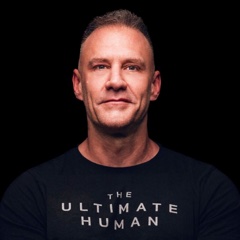
Gary Brecka
Former data analyst in the life insurance industry and founder of The Ultimate Human · Who he is, what he sells, where he stands →
PartlyGary Brecka (Former data analyst in the life insurance industry and founder of The Ultimate Human) · Dr. Josh Axe, August 2026 · watch the episode ↗︎ · stated with confidence
“Breathing exercises involving prolonged breath-holding increase CO2 tolerance and lead to systemic vasodilation.”
Gary Brecka (Former data analyst in the life insurance industry and founder of The Ultimate Human) · Dr. Josh Axe, August 2026 · watch the episode ↗︎ · stated with confidenceThat the body adapts to higher carbon dioxide levels through practising breath-holding is plausible and has been observed in divers. Systemic vasodilation, however, is an oversimplification: during breath-holding, activity in the sympathetic nervous system also rises, causing blood vessels in the arms and legs to contract while those in the brain dilate. The body does both at the same time, in different places.
PartlyGary Brecka (Former data analyst in the life insurance industry and founder of The Ultimate Human) · Dr. Josh Axe, August 2026 · watch the episode ↗︎ · stated with confidence
“Carbon dioxide is the most important endogenous vasodilator in the human body, not nitric oxide.”
Gary Brecka (Former data analyst in the life insurance industry and founder of The Ultimate Human) · Dr. Josh Axe, August 2026 · watch the episode ↗︎ · stated with confidenceThat carbon dioxide dilates blood vessels is correct and well documented, particularly in the brain: at higher CO2 levels, blood flow there increases measurably. However, the reversal of the claim goes too far. Nitric oxide is the substance through which the vessel wall itself regulates blood flow, a role established by Nobel Prize-winning research. These are two distinct mechanisms, not competitors for first place.
PartlyGary Brecka (Former data analyst in the life insurance industry and founder of The Ultimate Human) · Dr. Josh Axe, August 2026 · watch the episode ↗︎ · stated with confidence
“Intermittent hypoxia stimulates the production of new mitochondria and can lower biological age.”
Gary Brecka (Former data analyst in the life insurance industry and founder of The Ultimate Human) · Dr. Josh Axe, August 2026 · watch the episode ↗︎ · stated with confidenceThat the body responds to oxygen deprivation with adaptations in the mitochondria is well established from altitude and exercise research. The leap to a lower biological age is an entirely different matter: it would require measuring an ageing clock before and after, in a controlled study design, and that research does not exist. The first part is physiology; the second is a promise.
Brigham Buhler
Founder of healthcare and wellness clinic Ways2Well
PartlyBrigham Buhler (Founder of healthcare and wellness clinic Ways2Well) · Dr. Josh Axe, October 2026 · watch the episode ↗︎ · stated with confidence
“Berberine improves insulin sensitivity and supports the treatment of insulin resistance and type 2 diabetes.”
Brigham Buhler (Founder of healthcare and wellness clinic Ways2Well) · Dr. Josh Axe, October 2026 · watch the episode ↗︎ · stated with confidenceResearch shows that berberine measurably lowers blood sugar and can offer broader metabolic benefits for people with type 2 diabetes, so the general direction of the claim is correct. However, the wording goes further than the evidence justifies: the evidence is moderate and the claim lacks the necessary caveats. The European food safety authority was unable to establish a safe intake level due to indications of DNA and liver damage, and berberine has strong interactions with many medications, including diabetes medication itself. Presenting berberine as a support for insulin resistance and diabetes without these qualifications is incomplete.
PartlyBrigham Buhler (Founder of healthcare and wellness clinic Ways2Well) · Dr. Josh Axe, October 2026 · watch the episode ↗︎ · stated with confidence
“Exposure to microplastics in the body leads to a significant drop in testosterone levels.”
Brigham Buhler (Founder of healthcare and wellness clinic Ways2Well) · Dr. Josh Axe, October 2026 · watch the episode ↗︎ · stated with confidenceThere are indications that microplastics can affect male fertility and hormonal balance, but these indications come largely from laboratory and animal studies. It has not yet been demonstrated in humans that everyday exposure to microplastics leads to a significant drop in testosterone levels. The claim therefore goes further than current research can substantiate.
Alex Clark
Podcast host and media personality, known from Culture Apothecary
PartlyAlex Clark (Podcast host and media personality, known from Culture Apothecary) · Dr. Josh Axe, September 2026 · watch the episode ↗︎ · stated with confidence
“Clothing made from synthetic materials such as polyester releases microplastics that are absorbed through the skin and by breathing and act as hormone disruptors.”
Alex Clark (Podcast host and media personality, known from Culture Apothecary) · Dr. Josh Axe, September 2026 · watch the episode ↗︎ · stated with confidenceThat synthetic clothing releases microplastics and that these particles enter the body through breathing and possibly through the skin is consistent with what research shows: microplastics have demonstrably been found in the human body. There is also research showing that some hormone-disrupting substances are present in everyday plastic products and are measurable in blood and fatty tissue. However, the claim states too categorically that polyester clothing acts as a hormone disruptor through these routes: the evidence for that specific mechanism in humans is still predominantly associative and comes largely from laboratory and animal studies. How significant the risk of clothing as a source is during everyday exposure, and whether it genuinely leads to hormonal disruption, has not yet been scientifically established.
PartlyAlex Clark (Podcast host and media personality, known from Culture Apothecary) · Dr. Josh Axe, September 2026 · watch the episode ↗︎ · stated with confidence
“Daily nicotine use leads to dehydration and accelerates skin ageing.”
Alex Clark (Podcast host and media personality, known from Culture Apothecary) · Dr. Josh Axe, September 2026 · watch the episode ↗︎ · stated with confidenceSmoking demonstrably accelerates skin ageing through oxidative stress and inflammation, and multiple systematic reviews confirm that smoking is an independent risk factor for wrinkles and loss of elasticity. However, the claim goes beyond what the research shows: there is no evidence that nicotine specifically causes dehydration as a mechanism behind skin ageing, and the claim focuses on nicotine in particular while the evidence concerns smoking as a whole. Moreover, evidence for the role of dehydration in this context cannot be found in the available research.
From the episodes, no speaker named
PartlyDr. Josh Axe, October 2026 · watch the episode ↗︎ · stated with confidence
“Consuming extra virgin olive oil within a Mediterranean diet reduces the risk of heart attacks and strokes by approximately 30 percent.”
Dr. Josh Axe, October 2026 · watch the episode ↗︎ · stated with confidenceThe Mediterranean diet does indeed reduce the risk of heart attacks and strokes by around 25 to 30 percent, and this has been demonstrated consistently in large randomised trials and population studies. However, the claim attributes that benefit specifically to the extra virgin olive oil, whereas the research shows that it is the overall dietary pattern that matters. Which component of the diet contributes most has not yet been established. The olive oil is one part of that pattern, not the decisive factor in itself.
✗ Does not hold upDr. Josh Axe, September 2026 · watch the episode ↗︎ · stated with confidence
“Adding 10 grams of fibre to your daily diet can extend life expectancy by more than 5 years.”
Dr. Josh Axe, September 2026 · watch the episode ↗︎ · stated with confidenceEating fibre is indeed robustly linked to a lower risk of premature death, but the claim that 10 extra grams of fibre per day extends life expectancy by more than 5 years goes well beyond the available evidence. The research speaks of a lower risk of premature death and chronic disease, not of a concrete number of years gained. That precise figure of five years cannot be substantiated on the basis of current research.
✗ Does not hold upDr. Josh Axe, September 2026 · watch the episode ↗︎ · stated with confidence
“Following a Mediterranean diet can extend life expectancy by 7.5 years.”
Dr. Josh Axe, September 2026 · watch the episode ↗︎ · stated with confidenceLarge analyses show that the Mediterranean diet is associated with lower mortality and fewer cardiovascular diseases, but a concrete gain of 7.5 years in life expectancy is not supported by the available research. Those studies point to a lower risk of death and a reduced disease burden, not to an established number of extra years lived. Moreover, the evidence comes largely from observational research, in which cause and effect cannot be fully separated, which makes such a precise claim untenable from the outset.
PartlyDr. Josh Axe, September 2026 · watch the episode ↗︎ · stated with confidence
“A chronically elevated cortisol level can lead to shrinkage of brain regions responsible for memory.”
Dr. Josh Axe, September 2026 · watch the episode ↗︎ · stated with confidenceChronically elevated cortisol does indeed have measurable effects on the brain and memory: prolonged stress impairs cognitive resilience, and the evidence for this comes from large review studies. However, the answers mention no direct link between chronically elevated cortisol and physical shrinkage of memory regions such as the hippocampus. Brain shrinkage in ageing is well documented, but in the available research it is attributed more to ageing and high blood pressure than specifically to cortisol levels. The direction of the claim is plausible, but the relationship between cortisol and measurable shrinkage of memory regions cannot be firmly established on the basis of this research.
✓ Holds upDr. Josh Axe, September 2026 · watch the episode ↗︎ · stated with confidence
“Fasting insulin rises years before changes in fasting blood sugar become visible.”
Dr. Josh Axe, September 2026 · watch the episode ↗︎ · stated with confidenceResearch shows that insulin resistance is already measurable through elevated fasting insulin while blood sugar is still completely normal. Standard blood sugar tests respond too late to pick up this early signal. This supports the claim that fasting insulin rises before changes in fasting blood sugar become visible. However, the exact size of that time difference is not expressed in concrete years in the research.
✓ Holds upDr. Josh Axe, September 2026 · watch the episode ↗︎ · stated with confidence
“Aggressive dieting or the use of GLP-1 agonists without strength training leads to loss of muscle mass alongside fat loss.”
Dr. Josh Axe, September 2026 · watch the episode ↗︎ · stated with confidenceResearch into GLP-1 medications shows that a quarter of the weight lost consists of muscle and other non-fat tissue. This pattern is consistent with what is known from aggressive dieting as well: alongside fat, you also lose muscle mass. Strength training is the most well-supported way to limit this, and without it you face a greater risk of muscle loss. The claim therefore accurately reflects the current state of the evidence.
✗ Does not hold upDr. Josh Axe, September 2026 · watch the episode ↗︎ · stated with caution
“Consuming 1 gram of protein per pound of body weight per day supports the maintenance and building of muscle mass after the age of forty.”
Dr. Josh Axe, September 2026 · watch the episode ↗︎ · stated with cautionThe recommendation of 1 gram per pound of body weight per day amounts to approximately 2.2 grams per kilogram per day. Research indicates that for maintaining and building muscle after the age of forty, an intake of 1.2 to 1.6 grams per kilogram per day is well supported, and up to 1.6 to 2.4 grams per kilogram when losing weight. The amount in the claim is therefore considerably higher than what the evidence recommends. Furthermore, research shows that strength training is at least as important as protein intake itself, something the claim does not mention at all.
PartlyDr. Josh Axe, September 2026 · watch the episode ↗︎ · stated with confidence
“For every 10 to 11 pounds decrease in grip strength, the risk of death increases by 16 percent.”
Dr. Josh Axe, September 2026 · watch the episode ↗︎ · stated with confidenceLarge-scale research consistently shows that low grip strength is associated with a higher risk of premature death, and that association is robustly supported. The direction of the claim is therefore correct. However, the specific figure of a 16 percent increase in risk per 10 to 11 pounds decrease in grip strength cannot be firmly established based on the available research. Moreover, this concerns an association, not a proven cause: grip strength reflects your overall muscular health and is not a direct cause of earlier death.
✓ Holds upDr. Josh Axe, August 2026 · watch the episode ↗︎ · stated with confidence
“Consuming fermented foods increases microbiome diversity and lowers 19 inflammatory markers within 10 weeks.”
Dr. Josh Axe, August 2026 · watch the episode ↗︎ · stated with confidenceRemarkably precise, because this comes from a randomised study by Stanford. People who ate fermented foods for ten weeks developed a more diverse microbiome and showed a decrease in nineteen inflammatory proteins. The group that increased their fibre intake did not see that effect. It is one of the few solid findings in microbiome research.
PartlyDr. Josh Axe, August 2026 · watch the episode ↗︎ · stated with confidence
“Around 70 to 80 percent of the human immune system is located in the gut.”
Dr. Josh Axe, August 2026 · watch the episode ↗︎ · stated with confidenceThis figure is repeated everywhere, but it is a rough estimate. What is true is that a large proportion of your immune cells are found in and around your gut, in the lymphatic tissue along the intestinal wall. Seventy or eighty percent is a rule of thumb for that, not a measurement. More important than the percentage is that your gut and your immune system are in constant dialogue with each other.
✓ Holds upDr. Josh Axe, August 2026 · watch the episode ↗︎ · stated with confidence
“Doing 30 to 60 minutes of strength training per week is associated with a 10 to 20 percent lower risk of death.”
Dr. Josh Axe, August 2026 · watch the episode ↗︎ · stated with confidenceCorrect, and this is the finding from a large review study. Half an hour to an hour of strength training per week goes hand in hand with a ten to twenty percent lower risk of death, cardiovascular disease and cancer. Notably, more than an hour per week did not yield any additional benefit in that same study.
✓ Holds upDr. Josh Axe, August 2026 · watch the episode ↗︎ · stated with confidence
“Three 15-minute walks after meals improve 24-hour blood sugar control just as much as a single continuous 45-minute walk.”
Dr. Josh Axe, August 2026 · watch the episode ↗︎ · stated with confidenceCorrect, and this has been measured precisely. In a study of older adults with elevated blood sugar, three short walks of a quarter of an hour after meals performed at least as well as a single three-quarter-hour walk, and even better after the evening meal. The timing matters more than the total duration.
PartlyDr. Josh Axe, August 2026 · watch the episode ↗︎ · stated with confidence
“Maintaining a consistent sleep-wake schedule reduces the risk of death by 20 to 48 percent compared to irregular sleep patterns.”
Dr. Josh Axe, August 2026 · watch the episode ↗︎ · stated with confidenceThe study exists and is large: in tens of thousands of people wearing a wrist tracker, a regular sleep schedule turned out to be more strongly associated with mortality risk than sleep duration itself. That is a striking and useful finding. However, the range of 20 to 48 percent comes from a single study, and irregular sleep is linked to shift work, illness, and poverty.
✓ Holds upDr. Josh Axe, August 2026 · watch the episode ↗︎ · stated with confidence
“Maintaining five healthy basic habits extends life expectancy by 12 to 14 years and reduces the risk of death by 74 percent.”
Dr. Josh Axe, August 2026 · watch the episode ↗︎ · stated with confidenceCorrect, and this is one of the best-known findings from the long-running American Nurses' Health Study. Five habits combined: not smoking, maintaining a healthy weight, exercising, drinking in moderation, and eating well, were associated with more than twelve extra years of life expectancy at age fifty. It remains observational research, but its scale and duration make it compelling.