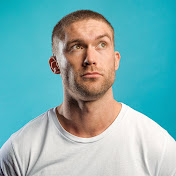
Modern Wisdom
hosted by Chris Williamson
We tested 22 claims from Modern Wisdom against the research. 4 held up, 1 did not, and the rest are partly true or still too early to judge.
What a speaker claims elsewhere is on their own profile.
We only test the claims that can be checked, not everything that is said. This is not a ranking.
Dr. David Sinclair
Professor of genetics at Harvard Medical School and aging researcher
✓ Holds upDr. David Sinclair (Professor of genetics at Harvard Medical School and aging researcher) · Modern Wisdom, August 2026 · watch the episode ↗︎ · stated with confidence
“Exposure to cold activates brown adipose tissue and stimulates the production of mitochondria in fat cells.”
Dr. David Sinclair (Professor of genetics at Harvard Medical School and aging researcher) · Modern Wisdom, August 2026 · watch the episode ↗︎ · stated with confidenceCorrect, and this has been well studied in humans. Regular cold exposure activates brown adipose tissue, which burns energy to generate heat, and triggers the production of new energy-generating structures within cells. What is less certain is whether this leads to noticeable weight loss or a longer life.
✓ Holds upDr. David Sinclair (Professor of genetics at Harvard Medical School and aging researcher) · Modern Wisdom, August 2026 · watch the episode ↗︎ · stated with confidence
“Regular sauna use (several times a week) significantly reduces the risk of cardiovascular disease.”
Dr. David Sinclair (Professor of genetics at Harvard Medical School and aging researcher) · Modern Wisdom, August 2026 · watch the episode ↗︎ · stated with confidenceCorrect in essence, and the evidence is stronger than for most lifestyle recommendations. Large Finnish population studies found significantly fewer cases of cardiovascular disease among people who used the sauna four to seven times a week compared to those who went once a week. One caveat: the research is observational, and people who sauna frequently tend to be healthier and more affluent in general.
Too earlyDr. David Sinclair (Professor of genetics at Harvard Medical School and aging researcher) · Modern Wisdom, August 2026 · watch the episode ↗︎ · stated with caution
“The enzyme nattokinase can reduce arterial atherosclerotic plaque.”
Dr. David Sinclair (Professor of genetics at Harvard Medical School and aging researcher) · Modern Wisdom, August 2026 · watch the episode ↗︎ · stated with cautionThere are a few small studies in which plaque thickness in the carotid artery decreased, but they are small, short-term and almost all from the same region. For a substance that acts as a blood thinner, that is far too little evidence, particularly when used alongside existing medication. A promising direction, but no proven effect.
PartlyDr. David Sinclair (Professor of genetics at Harvard Medical School and aging researcher) · Modern Wisdom, August 2026 · watch the episode ↗︎ · stated with confidence
“Supplementing with NMN raises NAD levels in the blood and improves metabolic biomarkers such as lipids and blood pressure in humans.”
Dr. David Sinclair (Professor of genetics at Harvard Medical School and aging researcher) · Modern Wisdom, August 2026 · watch the episode ↗︎ · stated with confidenceThe first part is correct: taking NMN demonstrably raises the amount of NAD in the blood, and this has been measured in multiple studies. What follows from that is far less clear. The studies on blood lipids and blood pressure are small, short-term and inconsistent in their findings. Moreover, NMN has not been approved as a food supplement in the EU.
✗ Does not hold upDr. David Sinclair (Professor of genetics at Harvard Medical School and aging researcher) · Modern Wisdom, August 2026 · watch the episode ↗︎ · stated with confidence
“Resveratrol directly binds to and activates the enzyme SIRT1, which contributes to the stabilisation of the epigenome.”
Dr. David Sinclair (Professor of genetics at Harvard Medical School and aging researcher) · Modern Wisdom, August 2026 · watch the episode ↗︎ · stated with confidenceThis is exactly where resveratrol research hit a wall. In 2010, researchers showed that the measured activation was a measurement artefact: it only appeared because a fluorescent label had been attached to the test protein, and disappeared as soon as the experiment was run with the actual protein. The claim that resveratrol directly activates this enzyme is therefore not tenable.
PartlyDr. David Sinclair (Professor of genetics at Harvard Medical School and aging researcher) · Modern Wisdom, August 2026 · watch the episode ↗︎ · stated with confidence
“A high intake of branched-chain amino acids (BCAAs such as valine, leucine and isoleucine) shortens lifespan in laboratory animals”
Dr. David Sinclair (Professor of genetics at Harvard Medical School and aging researcher) · Modern Wisdom, August 2026 · watch the episode ↗︎ · stated with confidenceThis has been found in mice: a diet high in these amino acids shortened their lifespan, even without the animals eating more overall. The proportions involved are extreme and unattainable through a normal diet, and the question has never been studied in humans. For people looking to preserve muscle mass in later life, the evidence actually points in the opposite direction.
PartlyDr. David Sinclair (Professor of genetics at Harvard Medical School and aging researcher) · Modern Wisdom, August 2026 · watch the episode ↗︎ · stated with confidence
“Restricting the window in which one eats (fasting) extends lifespan in laboratory animals, regardless of the exact macronutrient composition”
Dr. David Sinclair (Professor of genetics at Harvard Medical School and aging researcher) · Modern Wisdom, August 2026 · watch the episode ↗︎ · stated with confidenceIn laboratory animals, restricting food intake demonstrably extends life, that much is established. But the debate centres precisely on whether the eating window matters or whether it is simply the reduction in calories that counts. Recent mouse research suggests that timing does play a role, while other work shows that eating less is the main factor. Claiming this holds 'regardless of the details' is too categorical.
PartlyDr. David Sinclair (Professor of genetics at Harvard Medical School and aging researcher) · Modern Wisdom, August 2026 · watch the episode ↗︎ · stated with confidence
“Inducing specific Yamanaka factors (OSK) can reverse biological ageing in tissues and restore sight in laboratory animals”
Dr. David Sinclair (Professor of genetics at Harvard Medical School and aging researcher) · Modern Wisdom, August 2026 · watch the episode ↗︎ · stated with confidenceIn mice, this has actually happened: researchers restored vision in animals with damaged optic nerves by activating three of these factors, and that was a remarkable result. But it involved a single tissue, in an animal, under controlled conditions. There is no basis yet for the general claim that ageing in tissues can be reversed, and it has not been attempted in humans.
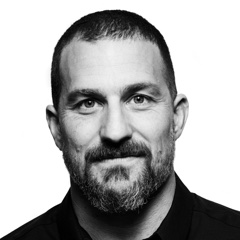
Andrew Huberman
American neuroscientist and associate professor of neurobiology at Stanford University School of Medicine · Who he is, what he sells, where he stands →
PartlyAndrew Huberman (American neuroscientist and associate professor of neurobiology at Stanford University School of Medicine) · Modern Wisdom, September 2024 · watch the episode ↗︎ · stated with confidence
“Morning exercise acts as a powerful zeitgeber for resetting the biological clock.”
Andrew Huberman (American neuroscientist and associate professor of neurobiology at Stanford University School of Medicine) · Modern Wisdom, September 2024 · watch the episode ↗︎ · stated with confidenceResearch shows that physical activity, particularly in the morning, supports the biological clock and reinforces the day-night rhythm. Daylight and a consistent morning routine also help synchronise your clock, making it easier to fall asleep in the evening. However, the claim that morning exercise is a 'powerful' zeitgeber goes somewhat beyond what the current evidence can substantiate: the studies are predominantly observational and demonstrate an association, but the magnitude of the effect relative to other zeitgebers such as daylight has not been precisely established.
PartlyAndrew Huberman (American neuroscientist and associate professor of neurobiology at Stanford University School of Medicine) · Modern Wisdom, September 2024 · watch the episode ↗︎ · stated with confidence
“Exposure to bright sunlight in the early morning is the most powerful stimulus for advancing the circadian rhythm and promoting alertness.”
Andrew Huberman (American neuroscientist and associate professor of neurobiology at Stanford University School of Medicine) · Modern Wisdom, September 2024 · watch the episode ↗︎ · stated with confidenceResearch shows that morning light plays an important role in synchronising the biological clock and promoting daytime alertness. The evidence for this is consistent, although large controlled experiments in humans are still lacking. However, the claim goes further by labelling morning sunlight as 'the most powerful stimulus': that specific superlative cannot be substantiated on the basis of available research, and other factors such as a consistent sleep-wake schedule and limiting evening light also play a demonstrable role in regulating the circadian rhythm.
PartlyAndrew Huberman (American neuroscientist and associate professor of neurobiology at Stanford University School of Medicine) · Modern Wisdom, September 2024 · watch the episode ↗︎ · stated with confidence
“REM sleep is crucial for removing the emotional charge from memories and experiences of the previous day.”
Andrew Huberman (American neuroscientist and associate professor of neurobiology at Stanford University School of Medicine) · Modern Wisdom, September 2024 · watch the episode ↗︎ · stated with confidenceResearch shows that REM sleep integrates memories while subtly reshaping them, which is consistent with the idea that emotional charge is processed. Nevertheless, the claim goes beyond the available evidence: the function of REM sleep is described as the integration and adjustment of memories, not explicitly as the complete removal of emotional charge. Moreover, much of this research has not established causality. The general direction is correct, but 'crucial for removing emotional charge' is stated more strongly than current science can firmly support.
PartlyAndrew Huberman (American neuroscientist and associate professor of neurobiology at Stanford University School of Medicine) · Modern Wisdom, September 2024 · watch the episode ↗︎ · stated with confidence
“Exposure to bright light in the morning directly suppresses melatonin levels.”
Andrew Huberman (American neuroscientist and associate professor of neurobiology at Stanford University School of Medicine) · Modern Wisdom, September 2024 · watch the episode ↗︎ · stated with confidenceResearch shows that evening light suppresses melatonin production, and that morning light helps synchronise the biological clock. However, the claim reverses this: in the morning, melatonin levels are already naturally low, because melatonin is a nocturnal hormone. The suppression of melatonin by morning light is therefore a much smaller effect than in the evening, and the available evidence relates primarily to evening exposure. The direction is biologically plausible, but 'directly suppresses' implies a strong and well-established morning effect that research does not specifically describe in those terms.
PartlyAndrew Huberman (Neurobiologist and professor of neurobiology at Stanford University School of Medicine) · Modern Wisdom, January 2026 · watch the episode ↗︎ · stated with confidence
“Bright light in the morning stops the production of melatonin via the suprachiasmatic nucleus to the pineal gland.”
Andrew Huberman (Neurobiologist and professor of neurobiology at Stanford University School of Medicine) · Modern Wisdom, January 2026 · watch the episode ↗︎ · stated with confidenceIt is correct that bright light in the morning suppresses melatonin production and that the suprachiasmatic nucleus (the biological clock) plays a central role in this. This mechanism is described as well understood. However, the claim states that morning light stops melatonin production, whereas the suprachiasmatic nucleus already sends an inhibitory signal to the pineal gland during the day regardless, and morning light strengthens and sharpens that signal. Furthermore, the claim specifically refers to stopping production, while research shows that what actually occurs is suppression and the fine-tuning of the biological clock, not a hard on-off switch.
PartlyAndrew Huberman (Neurobiologist and professor of neurobiology at Stanford University School of Medicine) · Modern Wisdom, January 2026 · watch the episode ↗︎ · stated with confidence
“During deep sleep, the spaces around brain blood vessels expand through the glymphatic system to remove metabolic waste products.”
Andrew Huberman (Neurobiologist and professor of neurobiology at Stanford University School of Medicine) · Modern Wisdom, January 2026 · watch the episode ↗︎ · stated with confidenceResearch confirms that the glymphatic system is active during sleep and that deep sleep plays the most important role in removing metabolic waste products. The claim is therefore broadly correct. However, the mechanism of expanding spaces around brain blood vessels is a more specific claim that goes beyond what available research in humans has unambiguously established; the precise workings have not yet been fully proven.
PartlyAndrew Huberman · Modern Wisdom, May 2026 · stated with confidence
“A low dose of tadalafil (2.5 to 5 mg per day) improves blood flow to the prostate and causes vasodilation in the brain in men over forty.”
Andrew Huberman · Modern Wisdom, May 2026 · stated with confidenceDaily tadalafil at 5 milligrams is an approved treatment for urinary symptoms caused by an enlarged prostate, so the drug genuinely does something there. However, the reasoning offered here: improved prostate blood flow and cerebral vasodilation as grounds for healthy men over forty to consider it, goes well beyond the evidence. This is a prescription medication with side effects, not a general remedy for healthy men.

Rhonda Patrick
PartlyRhonda Patrick · Modern Wisdom, February 2024 · stated with confidence
“Using a sauna four to seven times per week for at least 20 minutes at around 79°C yields the greatest benefits for cardiovascular health and overall mortality.”
Rhonda Patrick · Modern Wisdom, February 2024 · stated with confidenceObservational research shows that four or more sauna sessions per week are associated with the greatest cardiovascular health benefits and a lower risk of premature death, and that association is dose-dependent. However, the claim goes beyond the evidence on two points: a specific temperature of 79°C is not identified in the research as a threshold value, nor is a minimum duration of 20 minutes per session. Furthermore, the studies are exclusively observational, meaning no causal relationship has been established, and the evidence applies largely to men.
PartlyRhonda Patrick · Modern Wisdom, February 2024 · stated with confidence
“Daily use of a multivitamin improves cognition in older adults and slows brain ageing by approximately 2 years.”
Rhonda Patrick · Modern Wisdom, February 2024 · stated with confidenceResearch suggests that daily multivitamins do appear to offer some protection for memory in older adults, with an effect equivalent to roughly three fewer years of decline. However, the claim states 'approximately 2 years', which differs from the figure that emerges from the studies. Moreover, the evidence comes from several related studies within the same research programme, and independent confirmation is still lacking, so the conclusion is not as clear-cut as the claim implies. For other aspects of cognition and brain ageing more broadly, the evidence is limited or absent.
✓ Holds upRhonda Patrick · Modern Wisdom, February 2024 · repeated in September 2026 · stated with confidence
“Cold exposure immediately after strength training inhibits muscle hypertrophy and muscle growth.”
Rhonda Patrick · Modern Wisdom, February 2024 · repeated in September 2026 · stated with confidenceWell supported: randomised studies and follow-up analyses show that a cold bath immediately after strength training blunts muscle growth and part of the strength gains. Anyone training to build muscle is better off scheduling cold exposure several hours after the workout or on rest days.
✓ Holds upRhonda Patrick · Modern Wisdom, February 2025 · stated with confidence
“An intake of approximately 40 micromoles of sulforaphane increases the excretion of benzene within 24 hours by 60%.”
Rhonda Patrick · Modern Wisdom, February 2025 · stated with confidenceThis figure comes almost word for word from a randomised study conducted in the heavily polluted city of Qidong, China: a drink containing sulforaphane precursors increased benzene excretion by approximately 61 percent, from the very first day. One caveat: this is a single line of research, carried out in a specific environment.
PartlyRhonda Patrick · Modern Wisdom, February 2024 · stated with confidence
“Training with lighter weights produces as much muscle growth and strength gain as training with heavy weights, provided the effort and volume are high enough.”
Rhonda Patrick · Modern Wisdom, February 2024 · stated with confidenceFor muscle growth, this is correct: meta-analyses show that training light to near muscular failure produces comparable muscle growth to training heavy. For maximal strength, it does not hold: heavier training consistently comes out ahead. The strength part of the claim therefore goes too far.
Dr K HealthyGamer
Psychiatrist and founder of Healthy Gamer
PartlyDr K HealthyGamer (Psychiatrist and founder of Healthy Gamer) · Modern Wisdom, September 2026 · watch the episode ↗︎ · stated with confidence
“Muscle loss begins to visibly occur after about 10 days without strength training.”
Dr K HealthyGamer (Psychiatrist and founder of Healthy Gamer) · Modern Wisdom, September 2026 · watch the episode ↗︎ · stated with confidenceResearch shows that muscle strength remains fairly stable for up to around four weeks after stopping training, while endurance already measurably declines after ten days. The claim reverses these two: 'visible muscle loss after ten days' does not hold up well against the available evidence. Ten days is more the threshold for fitness loss than for muscle loss. The broader point, that stopping training sooner or later leads to loss, is correct.
Ben Greenfield & Dr. Gabrielle Lyon
Biohacker/author and physician specialized in muscle mass and longevity
PartlyBen Greenfield & Dr. Gabrielle Lyon (Biohacker/author and physician specialized in muscle mass and longevity) · Modern Wisdom, September 2026 · watch the episode ↗︎ · stated with confidence
“Maintaining muscle mass and bone density as we age is one of the most important indicators of healthspan and longevity.”
Ben Greenfield & Dr. Gabrielle Lyon (Biohacker/author and physician specialized in muscle mass and longevity) · Modern Wisdom, September 2026 · watch the episode ↗︎ · stated with confidenceMuscle strength does indeed play a well-supported role in healthy ageing: losing it increases the risk of falls, disability and premature death, and strength training demonstrably reduces those risks. Bone density is also considered relevant in the research, but the evidence for it is more limited and focuses mainly on slowing loss rather than building it up. The claim goes a step further by presenting muscle mass and bone density together as one of the most important indicators of both healthspan and longevity, whereas the evidence for bone density as an independent predictor of longevity is not stated that explicitly in the available studies.